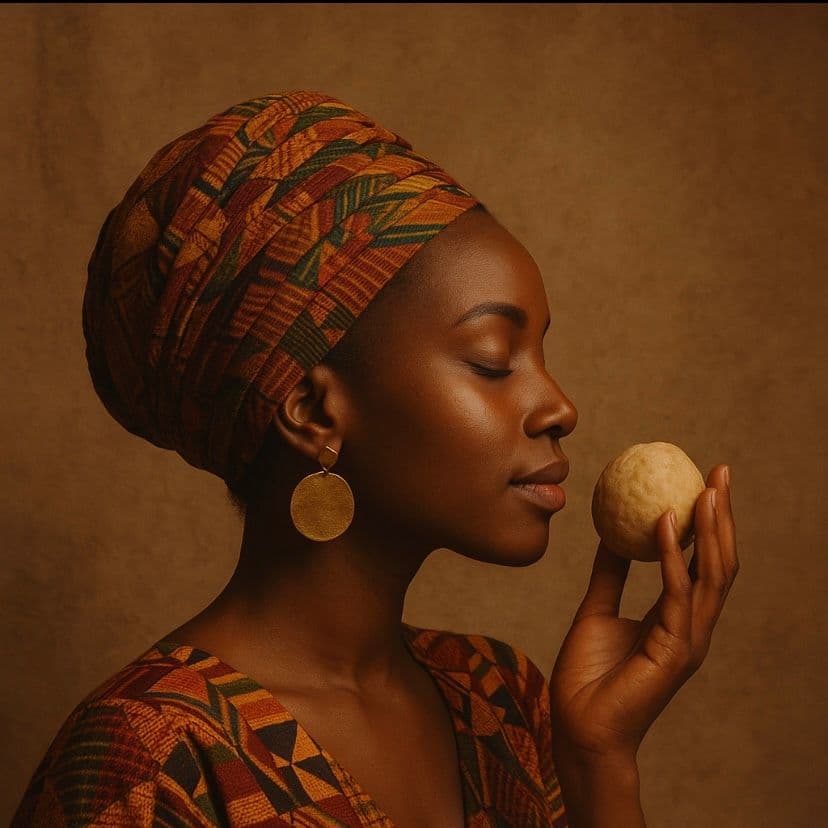

There is something the runway never captures. Even the most polished fashion campaign or glossy magazine cover cannot properly capture it. It wafts past visuals, settles into your throat, slips into your memory, and hums away. It's the smell. The smell of fabric removed from a wooden trunk, of shea butter warmed by palm-rubbed skin, of faint detergent on lace left out to dry under the noonday sun. African fashion, as the world likes to package it—bold prints, dramatic silhouettes, joyful resistance—is often reduced to something to be looked at. But if you've ever stood still in the middle of your mother's bedroom while she ties a wrapper, leaned over a market stall to choose lace and rubbed the fabric against your nose out of habit, or inhaled that sharp, synthetic smell from a tailor's workshop while waiting for your clothes, you'll understand that African fashion is more than just visual. It is aromatic, familiar, and ceremonial. It smells like all we inherited and survived.
The scent of shea butter—real shea, not the floral body mist versions—is primal. Nutty, heavy, slightly sour, and distinctly human. It’s the scent of softness, the one that’s been scooped out of reused plastic containers and pressed into elbows and knees for generations. It lingers on the inside of blouses, especially cotton ones, and melds into the underarms of Ankara dresses with every wear. Women oil their skin before weddings, before church, before bed. You don’t even notice until someone hugs you and their shoulder smells like shea. Sometimes it mixes with talcum powder or pomade, creating a soft blur of femininity that no high-end perfume can quite mimic. That’s African fragrance—layered, bodily, not mass-produced. It clings to wrappers, chiffon scarves, the inner lining of headwraps. Even if you launder it, it stays. There’s always someone beside you whose style you cannot see, but you can smell.
Markets have their own scent symphony. The air in fabric rows is infused with the musty perfume of tightly packed bales—new but not fresh, dyed but not clean. Roll after roll of Ankara, stacked like bookshelves, exudes a scent that is part dye, part humidity, part sweat from the man who just offloaded them. There's the burnt whiff of synthetic fabric rubbing too quickly against itself. The tailors nearby use charcoal irons or dangerously rewired ones that overheat and sear the fabric, releasing that familiar sharpness—literally, the smell of pressing urgency. All of this dances in the same area as the aroma of fried chin chin, roasted groundnuts, plastic bags, and leather sandals. The market is more than just a place of commerce. It is a greenhouse for fashion's earliest scent memories. We smell before we label trends, before we talk about palettes or seasons.
Then there is mothball memory—popularly called camphor. The chalky, medicinal scent that clings to the oldest trunks—the ones hidden beneath your grandmother’s bed or tucked into the back of a cupboard no one ever opens to. These trunks store clothes too valuable or too old to wear. Lace that once touched sacred ceremonies. Silk blouses that carried flirtation. Wrappers folded neatly, tight as secrets. The mothballs are there to preserve, but they end up becoming a layer of meaning. When you open those trunks, you’re met with the collision of age and beauty. Some of the fabrics inside are discoloured by time, their scent louder than their colour. Yet there’s a strange reassurance in knowing that fabric, like memory, doesn’t fade quietly—it smells louder the longer it stays.
What about hair? African fashion does not stop at the collarbone; it continues into scalp and braid. Freshly braided hair smells like tension and petroleum jelly, like holding still and sitting through hours of repetition. If you've ever worn a freshly crocheted style, you know the scent of synthetic hair straight from the pack—plastic and vinegar, sharp and clinical. But once it meets the scalp and is oiled with coconut, tea tree, or any of the oils stored in old drink bottles in salons, it becomes part of your smell story. Hair is part of fashion. The smell of a hair salon—sweat, heat, spray, and the occasional fried egg from the next-door vendor—is all part of getting ready.
Even newness has its smell. When you collect your outfit from a designer—carefully packaged in tissue paper, sometimes with a handwritten tag or lavender sachet tucked in—the scent of starch or dry-cleaning fluid meets you first. Some fabrics are sprayed with rose water or pressed with scented oils. It’s a deliberate performance, one that reminds you that fashion is not just utility, it’s theatre. When a woman wears something new to a party, she expects to be smelled before she’s seen. The fragrance of newness—of money spent, care taken—is part of her silhouette.
But African fashion is also about repeat wear. Asoebi is rarely worn once. After the party, after the photos, the gele is folded and the dress is hung. The next time it’s worn, it smells faintly of perfume from the last occasion. There’s makeup on the collar. Sometimes powder still clings to the shoulders. And yet, this patina of wear—this scent history—is a mark of life, not decay. Unlike the Western obsession with freshness, we allow our clothes to age with grace. A wrapper can have the scent of a funeral and a naming ceremony all in its folds, and still feel appropriate for another event. We do not discard smell. We carry it forward.
And perhaps that is the heart of it. At its core, African fashion is about the senses, the rituals, the repetition, the memory, not new collections or editorial shoots. A wrapper does not need to be seen to indicate its presence. You don't have to see someone wrap their gele to understand that power is being built. You only need to inhale. And in that breath, you gather your mother, your neighbour, your tailor, and your entire childhood chronology. The shea, the dust, the smoke, the old lace. That is the perfume of culture.
Fashion, in Africa, is rarely silent—and never scentless.