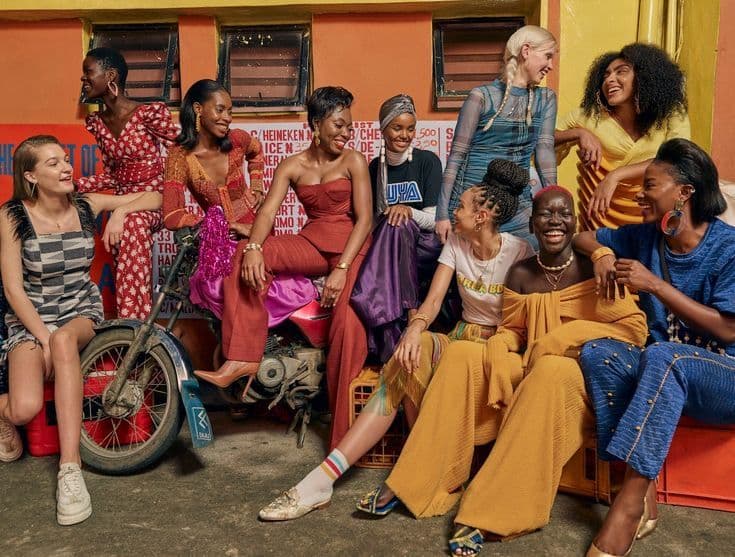

The old rules are dissolving, quietly and completely. Once upon a time, the phrase “dress code” evoked crisp white shirts, ironed trousers, skirt lengths measured in inches, and quiet, polished conformity. But Gen Z doesn’t want to conform—they want to express, and in their world, clothing is not about fitting in but about being seen, being specific, and being unbothered. For this generation, fashion isn’t an escape or a fantasy; it’s a real-time reflection of their values, identities, and cultural fluency. It’s not performance, but presence. Whether they’re stitching gender-neutral outfits together from thrift store bins, wearing political slogans on their sleeves, or refusing to separate traditional attire from modern silhouettes, Gen Z has decided that personal identity—not hierarchy or dress codes—is the only rule worth following.
The change is evident in public areas, workplaces, and even classrooms. The dichotomous reasoning of "casual Friday" and "business Monday" is being rejected by young professionals. Authenticity should never be compromised, which is why they are walking into internships wearing custom-painted sneakers and septum piercings. It's a silent refusal to shrink and not rebellion in the conventional sense. In many ways, Gen Z is allergic to performative dressing— the act of adopting a part or a costume for other people's comfort. They understand that your identity shouldn't be based on your surroundings. They are therefore opting to show up fully, in skin and denim and pattern and power.
The subtlety of this change is what makes it so drastic. No manifesto is in place. No single garment leading the change. Rather, the concept of "appropriate" has been widely and intuitively reevaluated. Caring about the planet, honouring your gender fluidity, displaying clear pride in your cultural background, or just refusing to mute your personality for the sake of a neutral office colour scheme are all examples of how to dress for the job you want today. It is an unwritten code of conduct in which upholding archaic notions of respectability is subordinated to the values embedded in what you wear. For Gen Z, style isn’t just what you wear—it’s how you align, how you show up, and what you’re willing to risk by being real.
Even the idea of trend-following has shifted. This generation doesn’t dress to fit in, but to signal belonging—to a niche, a community, a belief system. A girl in chunky boots and a mesh top might be referencing riot grrrl feminism; a guy in a skirt and painted nails might not be making a statement at all, just existing in comfort. A hijabi in sneakers and oversized streetwear might be curating her own hybrid aesthetic, one that needs no Western approval. What was once dismissed as confusion or contradiction is now celebrated as nuance. The point isn’t to make fashion legible to others, but to make it feel true to the person wearing it. And if the outfit leaves someone uncomfortable, Gen Z would argue—good. That discomfort is a mirror.
This identity-driven fashion movement isn’t limited to Western capitals and well-known influencers. It’s happening in Lagos, on the streets of Benin, in Johannesburg. Instead of translating their references for others, young people are uploading clothes that mix Owambe elegance with punk rebellion, and they are blending streetwear with traditional fabrics. It's more difficult than ever to identify a "universal" fashion language because of this global remix, and that's precisely the goal. Personal style is no longer about integration, according to Gen Z. The key is specificity. It involves making space in a world that never planned to accommodate you.
Of course, not everyone welcomes this change. Institutions are still catching up. Some schools and workplaces continue to enforce dress codes that feel rooted in outdated notions of professionalism and propriety. But the resistance is losing power. Every viral TikTok about getting “dress-coded,” every viral video of a student standing up for their right to wear what feels right, chips away at the old scaffolding. The tension is generational, but it’s also cultural, economic, and deeply emotional. Gen Z isn’t just dressing differently—they’re reprogramming the meaning of clothes altogether.
This generation has grown up online, shaped by constant exposure to new subcultures, aesthetics, and ideologies. But they’ve also grown up in crisis—in a world that feels on fire, literally and politically. That pressure has created a new kind of sartorial boldness. In a time when the planet is burning, democracy is fragile, and identities are under siege, dressing “normally” feels absurd. If the world is unstable, you might as well wear the truth. You might as well make your style a declaration, a diary, a shield. The real question becomes: why not?
And so, as Gen Z moves through the world, they’re rewriting the uniform. Not by tossing it out, but by expanding it. The new uniform is a spectrum, not a standard. It can include a fitted suit worn with platform Crocs, a gele tied over bleached brows, or a mix of thrifted layers that tell a story too specific for mass retail. It might be chaotic, vulnerable, or quietly radical. But it’s never accidental. It’s not a rejection of fashion, but a deeper investment in it—as a language, a politics, and a love letter to selfhood. And once that door is open, there’s no going back.
.